Amsterdam Museums 1
The Rijks Museum is located about 1.5 - 2 miles from the Ibis Hotel Centrum where we stayed three nights before collecting our campervan rental. We could have figured out public transportation, but we were happy to walk. Two famous paintings make the Rijks Museum world renowned: a Van Gogh self portrait, which I somehow missed taking a photo of, and Rembrandt's "Night Watch," which was viewable but was under restoration. So I give you another Rembrandt and two Vermeers with commentaries quoted from the museum.
For the full story of this trip and our first, much longer adventure in a motorhome, see my book
Ramblings & Roundabouts on Amazon
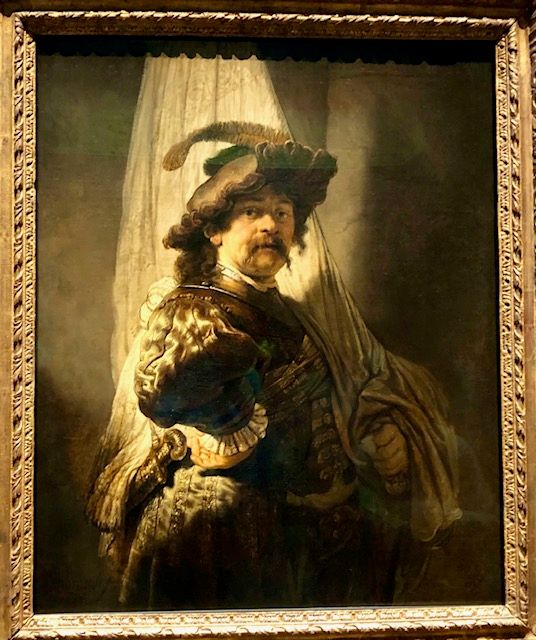
The Standard Bearer, Rembrandt van Rijn (1606-1669), oil on canvas, 1636
Rembrandt's ensign proudly poses near a column, the symbol of fortitude, his dagger within reach. Ensigns carried the banner of the civic guard or army. They had to defend this symbol with their life. When Rembrandt painted The Standard Bearer, he had just begun working for himself and was experimenting with a loose painting style. Rembrandt took himself as the model: the face behind the walrus moustache is recognizably his own.
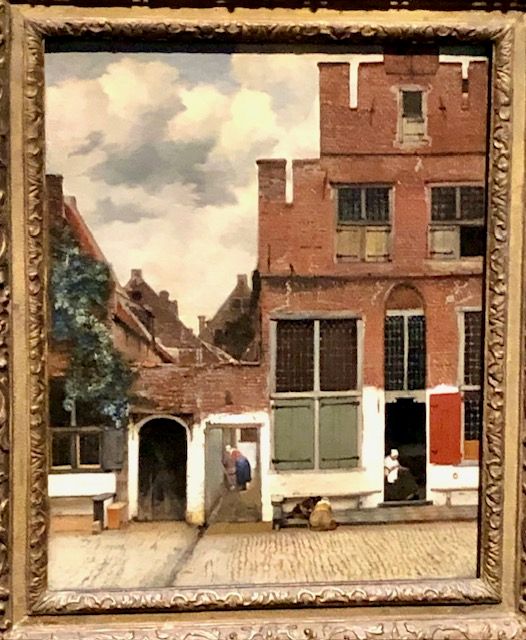
View of Houses in Delft, known as "The Little Street," Johannes Vermeer (1632-1675), oil on canvas, c. 1660
This is an unusual painting in Vermeer's oeuvre, and remarkable for its time as a portrait of ordinary houses. The composition is as exciting as it is balanced. The old walls with their bricks, whitewash, and cracks are almost tangible. The location is Vlamingstraat 40-42 in Delft. Vermeer's aunt Arlaentgen Claes lived in the house at the right, with her children, from around 1645 until her death in 1670.
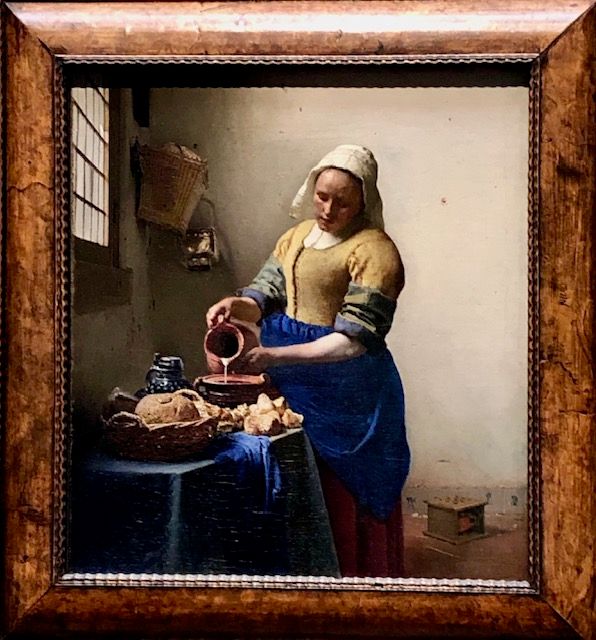
The Milkmaid, Johannes Vermeer (1632-1675), oil on canvas, c. 1660
A maidservant pours mild, entirely absorbed in her work. Except for the stream of mild, everything else is still. Vermeer took this simple everyday activity and made it the subject of an impressive painting - the woman stands like a statue in the brightly lit room. Vermeer also had an eye for how light by means of hundreds of colourful dots plays over the surface of objects.
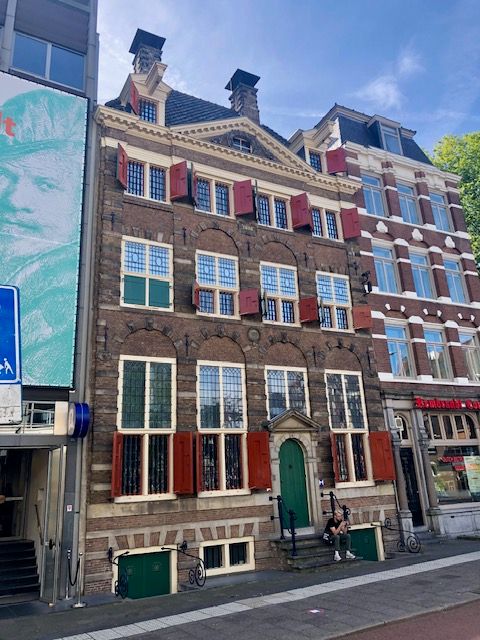
The Rembrandt House was much closer to our hotel, basically just around the corner. This is where the artist lived and worked for nearly twenty years. The audio tour was very good.
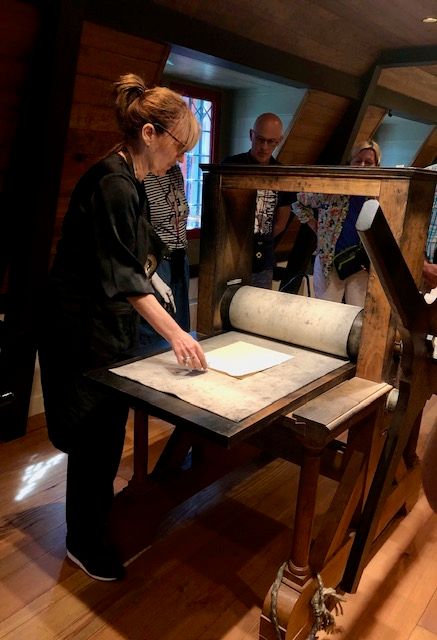
At the Rembrandt House, we viewed a demonstration of making a print of one of his engravings. Here the 'printer' is loaded.
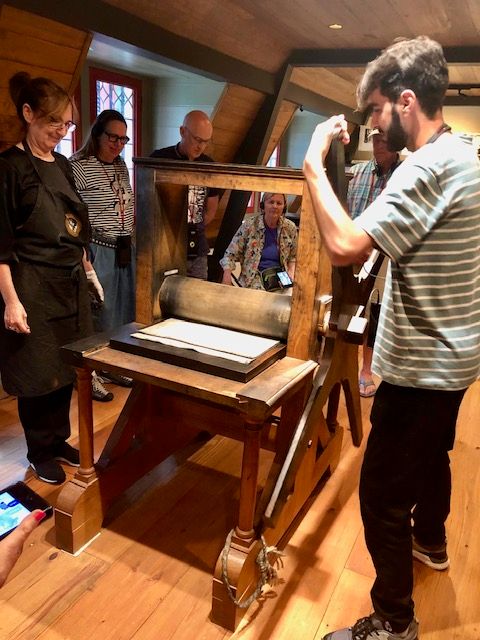
Next, a volunteer provides the power by turning the crank over and over, which feeds the paper under the roller.
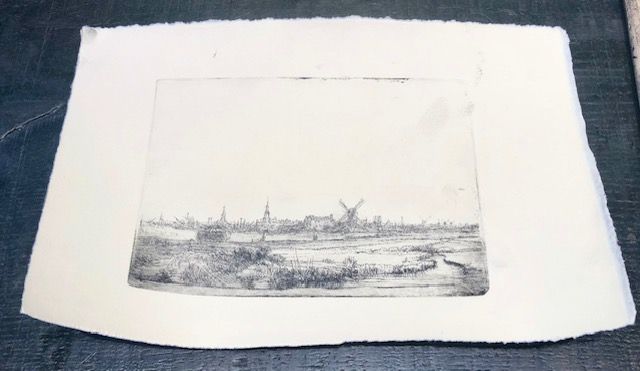
Voila! the finished product - a Rembrandt print.
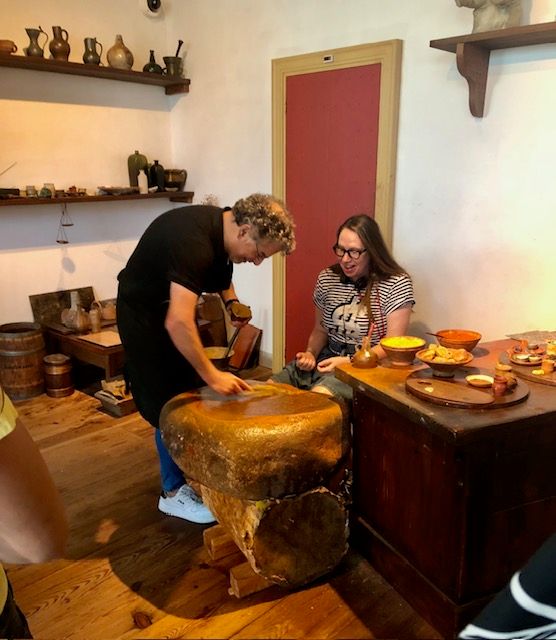
We also watched a demo of the production of paint. Artists couldn't run down to the local art supply store for their tools and supplies. They had to make their own. Above the docent shows the volunteer how to grind a pigment into paste with a special stone before she takes a turn.
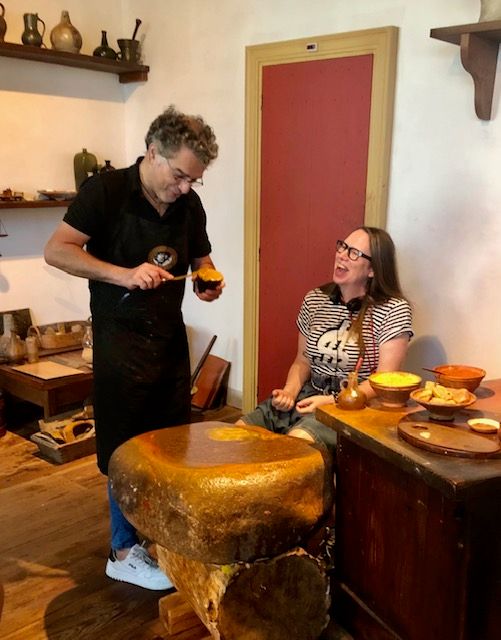
The docent has scraped up the pasty pigment and adds linseed oil to get the proper consistency. Time-consuming and laborious. Plus, pigments were very expensive, especially bright colors such as blue and red. This is one reason why much of Rembrandt's painting were done in earthy colors.
We very much enjoyed both the Rijks Museum and the Rembrandt House. Highly recommended!