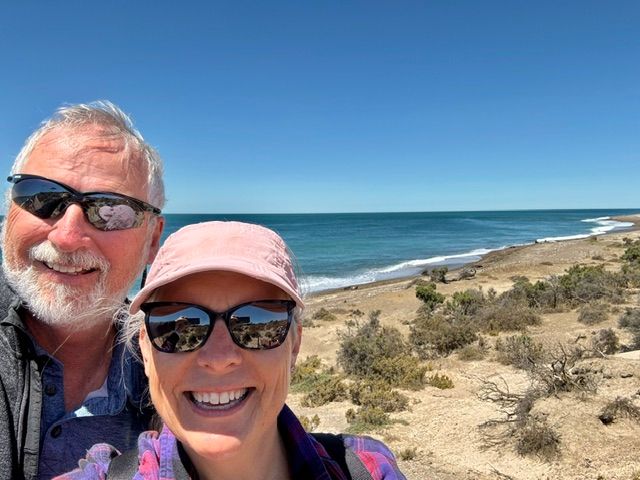
Puerto Madryn, Argentina, Days 5 & 6
After leaving Punta del Este, Day 5 was a 'sea day.' No port of call to stop at today. We ate a leisurely breakfast out on the deck because the weather was so mild. From our cabin's balcony, we enjoyed watching albatross glide over the waves. We also spotted what looked like whales in the distance, spouting and slapping their flippers, or maybe breaching.
We attended our first Spanish class offered by Andrea and Victor from Colombia. We attended a couple of talks about Antarctica as well as one about tomorrow's port, Puerto Madryn. In the evening, we enjoyed an Argentine couple playing their country's music including Tangos.
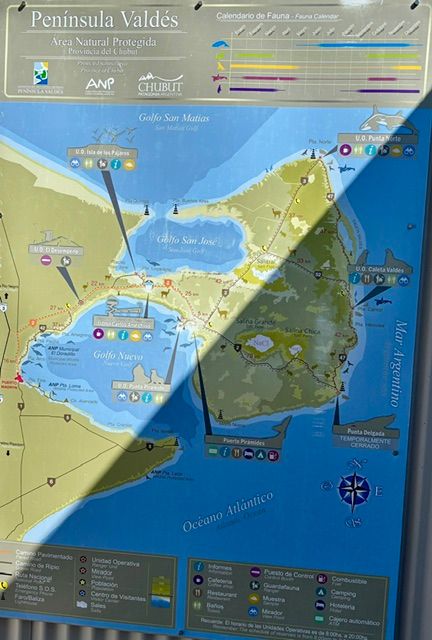
By sailing into Puerto Madryn, we had arrived in Patagonia! The town is indicated on the map by the red mark on the far left side. Today's excursion would take us by bus to the northeast tip of Peninsula Valdez; the point is called Punta Norte. I had learned about this peninsula watching a nature program about orcas. It is here at Peninsula Valdez where orcas were first filmed hunting seal pups by partially beaching themselves to snag pups off the sand. As you can see by the orca icons, we were in the right place, but unfortunately we did not see any.
Top Tip: Initially we had planned to explore the town of Puerto Madryn on our own. But then we learned there was not much to see. Once we realized the opportunities for viewing wildlife on the excursion out to Punta Norte, we opted for that. Some ports on this cruise are not really set up for tourism. They are small fishing villages that serve as jumping off points for exploration further afield. Be sure to do your research so that you won't be disappointed.
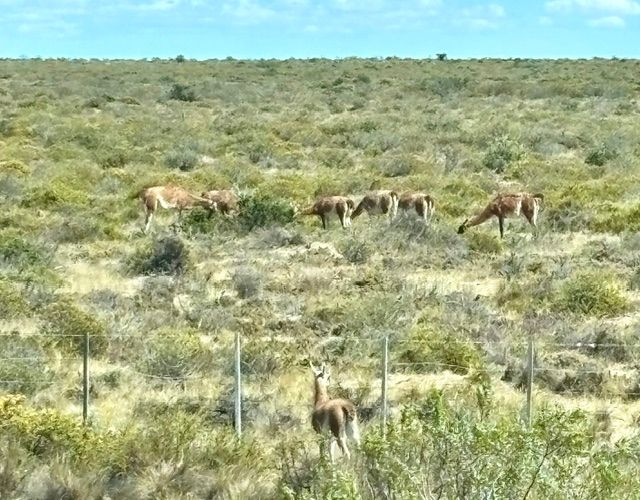
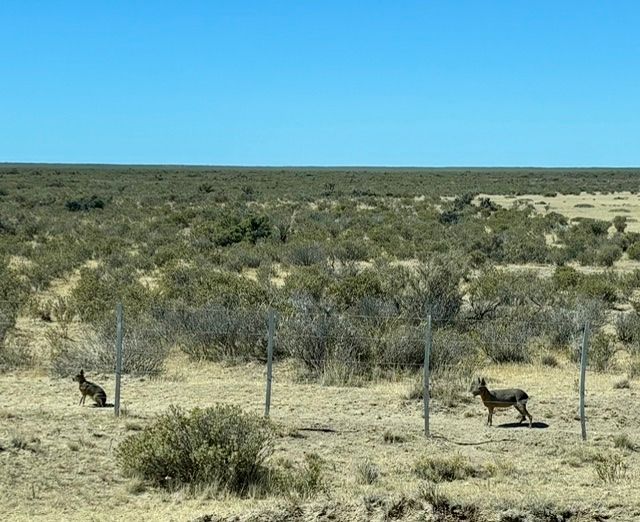
The east side of the Patagonia region of South America is dry, a perfect habitat for guanacos (above) which are related to llamas. The one on this side of the fence was trying to figure out how to reunite with his buddies.
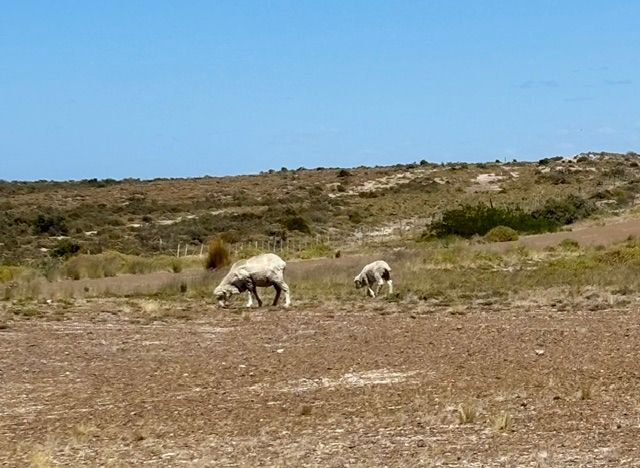
We also saw sheep, donkeys, and horses on the way to Punta Norte. The animals below are called Patagonian Hares or Mara. They look like a cross between a rabbit and a small deer. They are definitely rodents and are related to guinea pigs. They can run 35 mph! Thanks to the bus driver's and tour guide's sharp eyes, we also saw a Lesser Rhea, which is a flightless bird like an ostrich, and burrowing owls.
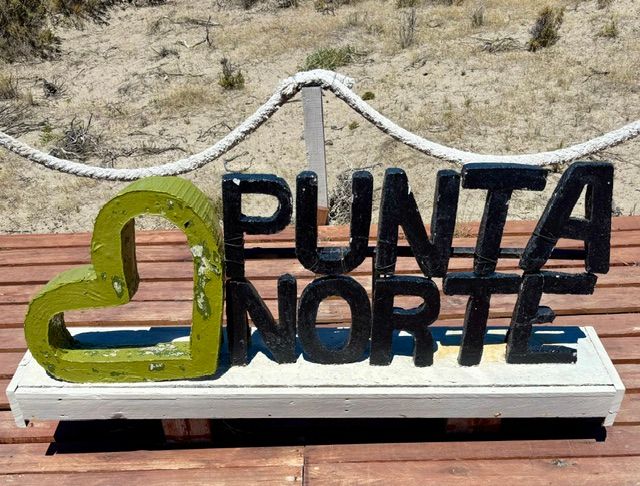
After stopping at a couple of visitor centers with nice exhibits about wildlife, but all in Spanish, we finally arrive at Punta Norte.
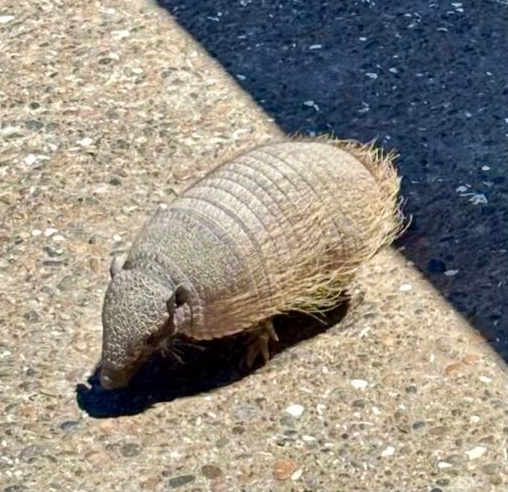
This hairy armadillo seemed quite at ease around people. He had a burrow near the visitor center and did not mind us walking past him.
At the beach, we saw lots of birds such as oystercatchers, cormorants, and sandpipers.
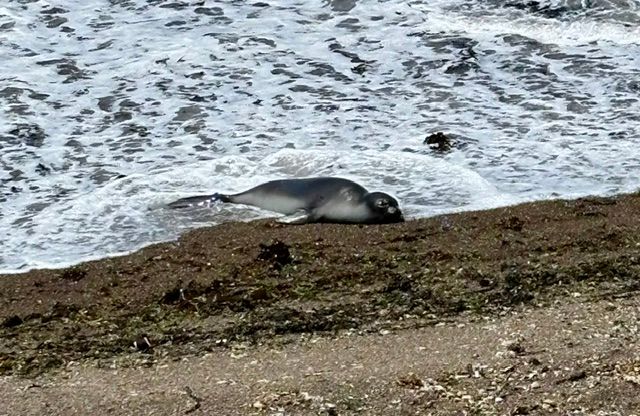
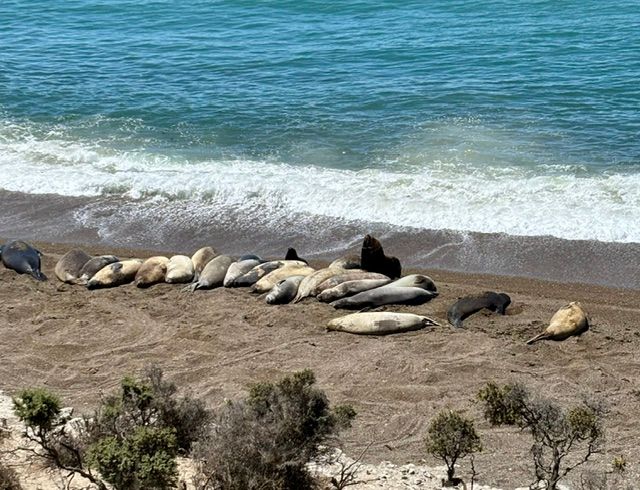
The seal above is most likely a fur seal. It was staying well apart from the dark, large male seal lion below. The blonde seals are female elephant seals. Their skin is molting, so they cannot return to the sea until their new skin is ready for the cold water.
What an amazingly remote, but full of life, place. This was a great excursion and day!
Bonus Tip: The sun is extremely strong in the southern part of South America and Antarctica because the ozone layer is thin. I got a bit sunburned on my arms and hands during our bicycle tours. So, wear your sunscreen!